
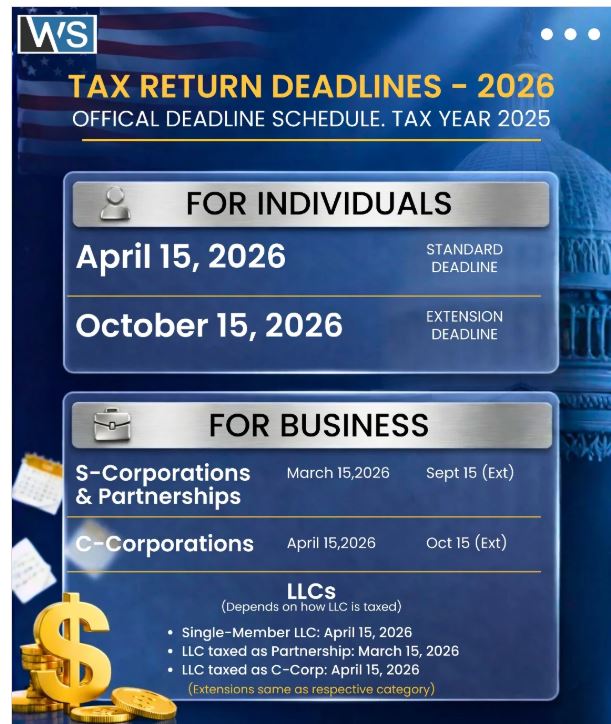
Staying ahead of tax deadlines is one of the simplest ways to avoid penalties, reduce stress, and keep both your business and personal finances running smoothly. The 2026 filing season (covering the 2025 tax year) has several critical due dates for individuals, partnerships, S corporations, C corporations, and other entities.
Here’s a clear breakdown of what’s due and when—so you can plan, prepare, and file with confidence.
Key Tax Deadlines for Individuals
April 15, 2026 — Individual Income Tax Returns Due
Your Form 1040 is due on April 15, 2026. This is also the final day to contribute to IRAs and HSAs for the 2025 tax year.
Extension Deadline: October 15, 2026
If you file an extension by April 15, your new due date becomes October 15, 2026. Remember—an extension gives you more time to file, not more time to pay.
Estimated Quarterly Taxes
Self‑employed individuals, freelancers, or anyone without sufficient withholding must pay estimated taxes. For the 2026 tax year, quarterly due dates are:
- April 15, 2026 (Q1)
- June 15, 2026 (Q2)
- September 15, 2026 (Q3)
- January 15, 2027 (Q4 for 2026 income)
Tax Deadlines for Businesses
March 16, 2026 — Partnerships & S Corporations
Calendar‑year partnerships (Form 1065) and S corporations (Form 1120‑S) must file by March 16, 2026, since the standard March 15 deadline moves to the next business day.
Extension Deadline: September 15, 2026
If extended using Form 7004.
April 15, 2026 — C Corporations
Calendar‑year C corporations must file their 2025 corporate return (Form 1120) by April 15, 2026.
Extension Deadline: October 15, 2026
If a timely extension is filed.
1099 & W‑2 Deadlines for Businesses
Businesses must issue wage and contractor forms early in the year to ensure workers can file their taxes on time.
February 2, 2026 (Adjusted from Jan 31)
Because January 31 falls on a weekend in 2026, these forms are due February 2, 2026:
- Form W‑2 to employees
- Form 1099‑NEC to contractors
Why These Deadlines Matter
Missing tax deadlines can result in:
- Late-filing penalties — up to 5% per month (max 25%)
- Late-payment penalties — 0.5% per month
- Interest charges on unpaid balances
For businesses, timely filing also prevents delays in issuing financial statements, renewing financing, and maintaining compliance with lenders or regulatory agencies.
Final Thoughts: Prepare Early to Avoid Stress
Whether you’re managing personal taxes or running a business, knowing your deadlines is the easiest way to stay compliant and avoid unnecessary penalties. Start early, get organized, and consult a tax professional if you want help maximizing deductions or navigating estimated taxes.
If you’d like, I can also create:
📌 A printable tax deadline calendar
📌 A version of this blog optimized for SEO
📌 A client newsletter version for your accounting firm
Just let RTW know!